
Borrowing From Benedict
A reflection from Pastoral Director, Rev. Tripp Hudgins, on the historical stream of Christian tradition in which we find ourselves here at Richmond Hill.

Let’s dive in more deeply to what it means to be a monastery in the 21st century. Grab a cuppa something and get comfortable.
Richmond Hill is an urban monastery praying for the spirit of the metropolitan city.
I’m sorry…what now?
When we talk about reclaiming ancient practices, we have to be careful. Monasteries have existed for millennia. We’re not doing anything new up here in Church Hill, per se. But we might be renewing or reinterpreting something. We might be borrowing.
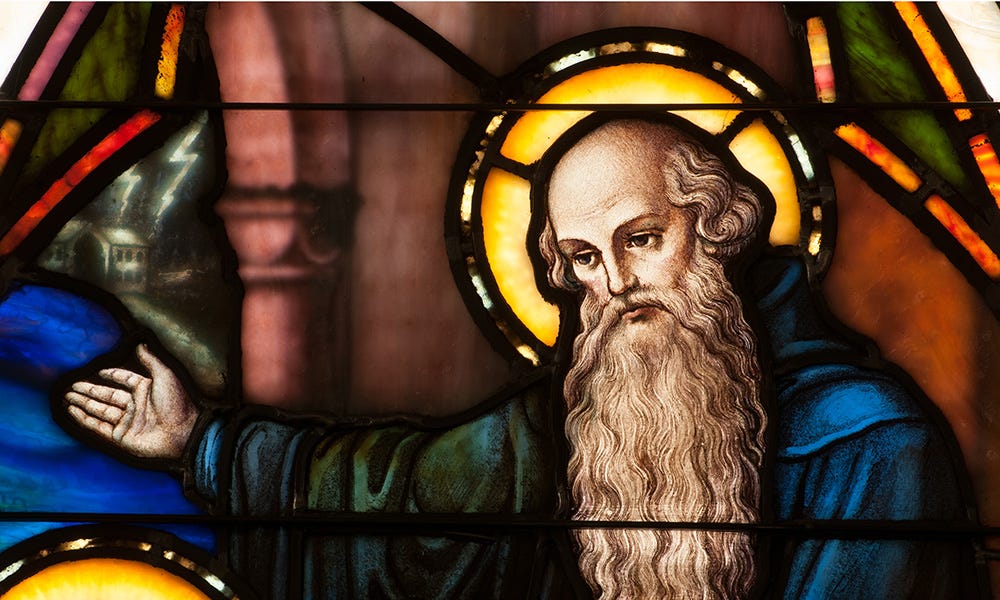
We claim to be following a modified Benedictine Rule. Benedict’s efforts at building community began in the early 6th century. He borrowed from the rule of St. Basil, whose communities emerged in the middle of the 4th century in Asia Minor. Basil borrowed from the Pacomian Koinonia, which had been founded a few decades earlier in Egypt. We come from a long and storied line of borrowers.
Borrowers. We claim nothing as our own, but everything as an expression of an ancient practice of gathering as a community of prayer that offers hospitality to friend and stranger alike.
Richmond Hill is unusual in American religious history, but it is not new, nor is it unusual in the history of Christianity.
I have to remind myself of this reality when I am tempted to allow novelty to define us. The novelty, if such exists, is contextual, cultural, or local. Richmond Hill is not a new expression of Christian faith. It borrows from an ancient set of practices that, for a time, might have been the dominant expression of Christian community.
A Pachomian understanding of the monastic community is that the koinonia is the body of Christ made visible in shared life. It was not just spiritual fellowship but literal economic and physical communion. Basil had a slightly different approach. Rather than being withdrawn from society, his ascetic communities were connected to the local church and intended to be spaces of giving and receiving charity. Benedict understood his communities to be schools of prayer, of what it means to be Christian together. Richmond Hill actually draws from the entire well with hospitality as our charism.
Through the residential community, we live a kind of Pachomian life together, supported by the corporate economic structure of the whole community. Like the Basilian, we are deeply connected to the life of the local congregation. We are not separate from or in competition with the life of the local congregation. We exist to serve the Church in Richmond. Finally, the Benedictine spirit runs through us in how we commit to a life of formation through prayer and hospitality.
Our contribution to this ancient line of Christian practice is the specific ministry of racial healing and working toward the transformation of the city. We aren’t hiding behind the walls. We are buttressed by them to do the work needed for the whole of the metropolitan city. We exist to transform the city, not to escape it.
How was that for a little historical philosophy?
Over the next several months, I will be sharing more deeply what I mean when I say that Richmond Hill is a monastery that runs a retreat center. You will read about how we are digging into our monastic roots and rediscovering what life together here means for the entire community that is Richmond Hill.
This includes you, too.
We come together in the monastic spirit to pray and work (ora et labora) for the healing and transformation of the metropolitan city…for the healing and transformation of all of us.
Peace and All Good Things,
Tripp
Thanks for engaging with the Richmond Hill Substack! Every post on this account is free and remains accessible to the public for a month before going behind a paywall. If you would like to read older posts in our archive and support the work we do, please consider a paid subscription to this Substack. Your contribution will go a long way in supporting us as we continue creating high-quality content.