
Where Do I Begin?
A reflection on what nature teaches us about finding the support we need, written by Richmond Hill Co-Gardener, Beth Nelson

Lately, I have been drawn to sit with my front porch garden in the early morning and watch the sun rise. Spending time in my garden with the early light of June is important to me. Like the recalling of a distant yet closely held memory, this sun-sitting time arrives as an annual ritual I participate in every year, whether I’m conscious of it or not.
Sitting with my garden at sunrise is a different experience in the city. The city bus begins keeping time on my block around 5:30am. Folks and their dogs stroll by and say hello; after all, they are only a few feet away. The other day I realized that maybe I should change out of my pajamas before heading outside after a conversation with two neighbors about bees and flowers, beauty and chaos, all before 6:55 am.
Early June mornings are a good time for questions, too. Today I found myself recalling a question I was given during a conversation with the Ruah XXII cohort about eco-spirituality and my spiritual path.
Where do I begin?
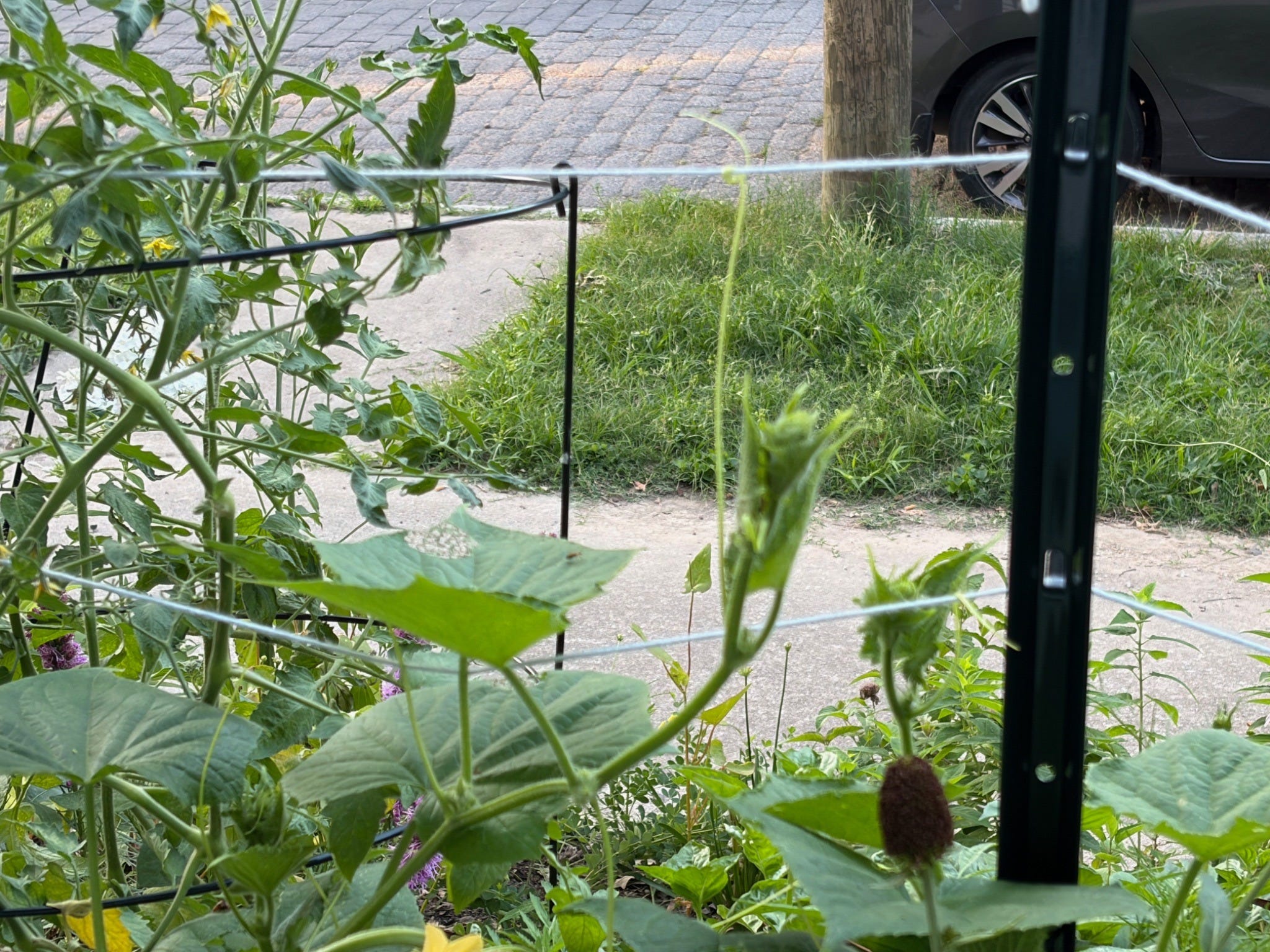
With this question lingering in my mind, my gaze fell upon a tendril of a cucumber vine. Just two days ago I finally put up a trellis for these sweet plants who’d already been rambling amongst the tomatoes and flowers for weeks. Better late than never.
Thankfully, plants move on with the business of growing pretty quickly (generally speaking) after I’ve repaired my mistakes. This morning a tendril had already found and clasped support.
Pay attention. Be Astonished. Tell about it.
~Mary Oliver, in her poem Sometimes
With curiosity as my guide, I found myself wondering, how do they do that? I recalled vague images from film strips in junior high science class, and with a quick search, found a helpful video online that jogged my memory.
Cucumbers employ a creative way to find support in their search for the sun amongst other plants who have strong upright stems: they send out modified stems, called tendrils, to find, grab, and pull themselves upward. In their unique, biologically creative way, their tendrils expand and contract, wind and unwind. With support from within and those nearby, they find what they need.
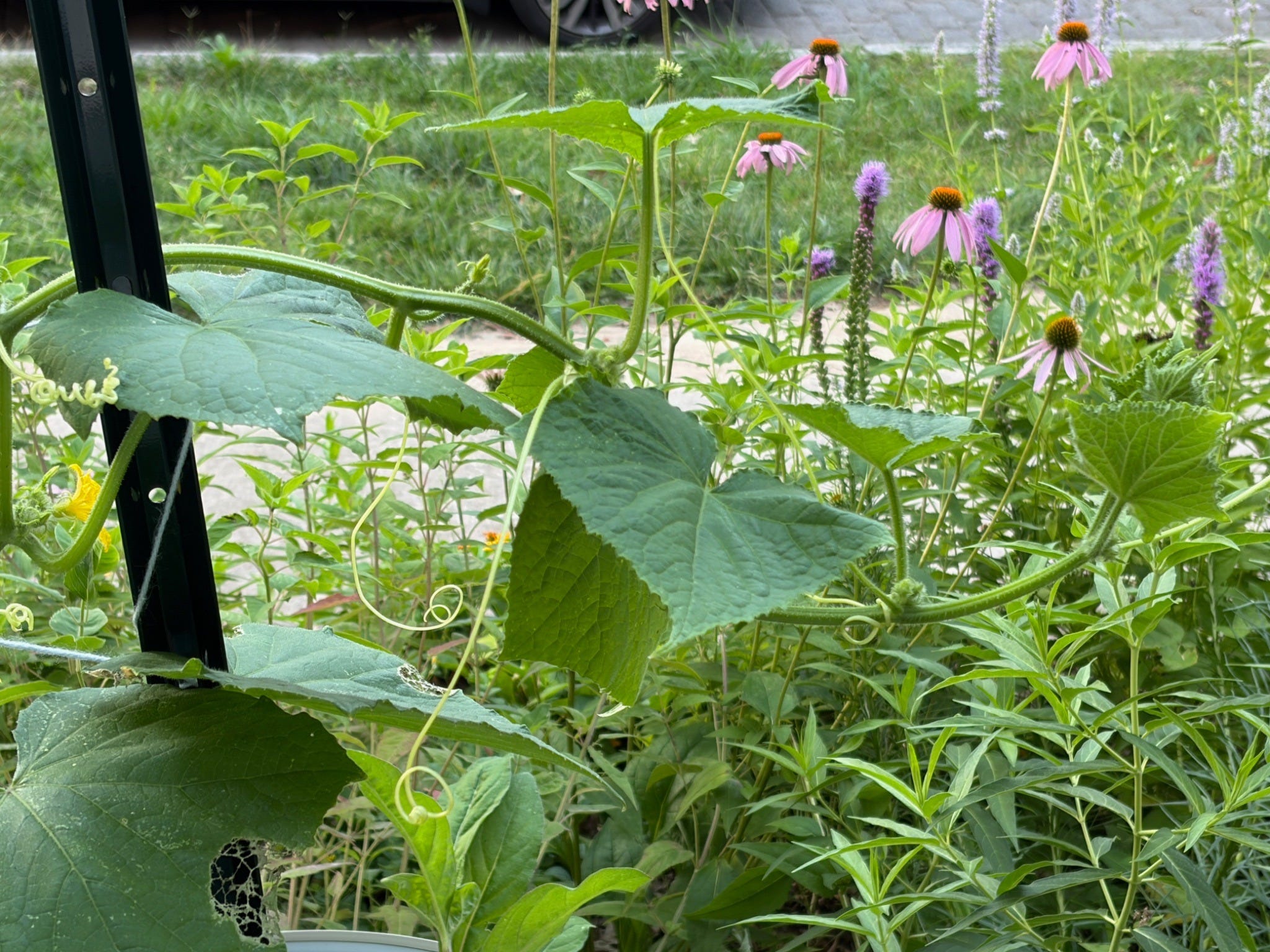
It wasn’t long before the curly, bright green modified stems offered a question from Wisdom meant just for me: “Where do I go and to whom do I reach for support?”
It’s a question that has been ringing in my ears after multiple people asked many versions of it over the last few weeks. Apparently the cucumber was getting on board - inviting me to explore my inclination to push through on my own until a job is done rather than ask for support. 😳
After carrying this question for a few days, another June sunrise brought a deepening question, again, a question direct from Wisdom: what creative modification is available within me to help me do what I need to do (in this case, reach for and find support) in a way that’s not typically done? I held this question in the context of the Summer Solstice - the longest day - and my own thoughts about a golden ball of light held within that is our own unique beauty shining forth.
I know this question was meant for me because it speaks to my love for creative, atypical ways of solving problems, answering questions, and finding a way that is a bit quirky to accomplish a task. It hits home in a way that leaves me filled with awe, wonder, a bit of trepidation, and anticipation for what may be possible. And it will require more June morning conversations and accompaniment by Wisdom and my nature kin to explore.
Where do I begin?
We begin by paying attention and allowing ourselves to be drawn in by a childlike seeking and openness to synchronicities that we encounter. We begin by welcoming questions, curiosities, and wonderings. We begin with conversations and sharing what we experience.
Invitation:
Maybe you aren’t tending rambling cucumbers in a native plant garden, but there are other beings of nature that share your space. The next time you’re outside, or gazing through a window, or tending a houseplant, allow yourself to be drawn in for just a moment. Notice. What do you see? What do you feel? Is there a question that arrives? Open up to synchronicities and follow the threads of your curiosity. With a bow of gratitude, receive what is given and carry it with you throughout the day.
Pay attention. Be astonished. Tell about it.
So famously and wisely stated by Mary Oliver in her poem, Sometimes.
May your summer mornings be filled with the light of good conversations, meaningful companionship, and gifting questions 🌞
- Beth
This reminds me of my sense of hopelessness with these prolific Asian Yam plants and the utter sense of futility of ever getting them under control in the gardens of Richmond Hill! After 2-3 Years(!) of trying to eradicate this particular invasive plant, I was in tears when just a tiny patch yielded over 30-40 NEW plants in the newly-planted Grace St garden in just a month or two! That patch, totally intermingled with the new plantings, took me over 2hrs to clear all the yams…and I know a portion of them left growable pieces that will re-sprout! The rest of the new Grace Street Garden has other patches of this kind invasive species, but not as innumerable as the patch I just attempted to clear.
But, as in Beth’s story, my time in the Richmond Hill Gardens has a way of “going home with me!” Several hours after I had returned home, a possible lesson of this particular invasive ”gem” came to mind. The success of this plant to literally -Invade- this huge garden space, the WHOLE plantable space from year to year, was due to the way it produces so many twin seed pods every 4-5” of growth just before the fall season.
All these years, I had been attacking the plants themselves by digging each plant up, not paying much thinking to the fact that the yam vines climbing up tall trees could possibly release as much as 15x2 seed pods PER PLANT!!
So, what was the plant’s SAVING message to me? Simple—cut each vine off down to 2 leaves (so I can find them) BETWEEN NOW AND SEED-SETTING TIME, so the population of seeds dropping